New Ewé Cultural and Spiritual Centre in Togo: Francis Kéré’s Museum Opening in 2026
The historic town of Notsé in Togo is preparing to welcome one of West Africa’s most distinctive cultural projects in 2026. Designed by Pritzker Prize-winning architect Diébédo Francis Kéré, the Centre des Cultures et Spiritualités Ewés (CCSE) will celebrate the history, religious traditions and artistic heritage of the Ewé people. The 7,000-square-metre complex combines museum exhibitions with temples, ceremonial spaces, an open-air amphitheatre and a reconstruction of the ancient royal palace. Although construction was originally expected to finish in February 2026, cultural opening listings now indicate November 2026, with official confirmation of public access still pending. For travellers interested in African history, architecture and living traditions, the centre represents an important new reason to visit southern Togo.
A New Cultural Landmark in the Historic Town of Notsé
The Centre des Cultures et Spiritualités Ewés is being developed in Notsé, approximately 80 kilometres north of Lomé, the Togolese capital. Notsé occupies an important position in Ewé historical memory because of its association with the former Ewé kingdom and the migrations that shaped communities across modern-day Togo, Ghana and neighbouring territories. Unlike conventional museums built around collections of objects, the new centre is conceived as a place where history, spiritual practices and contemporary community life can exist together. Its location is particularly significant: the project surrounds the remains of the ancient Agbogbo wall and the Agbogbodzi Sanctuary, two landmarks closely connected with the town’s cultural identity. The intention is to make these historic features central to the visitor experience rather than treating them as isolated archaeological exhibits.
The project was initiated by the Kothor Foundation, founded by Kokou Djifanou Kothor, and developed with Kéré Architecture. Construction began in October 2024 following a design process that started in 2022. The complex includes exhibition galleries, an auditorium, gathering areas, places of worship, restaurants and outdoor spaces for community events. Its programme reflects the foundation’s ambition to strengthen knowledge of Ewé traditions among younger generations while making that heritage more accessible to international visitors. Rather than presenting ancestral beliefs exclusively as historical subjects, the centre is intended to recognise their continuing importance within local communities. This approach distinguishes the project from a conventional history museum and gives it a broader cultural and educational purpose.
The opening timetable requires particular attention. Kéré Architecture initially announced February 2026 as the expected construction completion date, but later museum-opening publications identified November 2026 as the anticipated opening period. As of early November 2026, the architect’s official project record still describes the centre as under construction, and a confirmed inauguration date, ticketing arrangements and regular visitor hours have not been publicly established through the available project information. Travellers should therefore treat November as a scheduled opening rather than confirmation that the entire complex is already accessible. This distinction matters because completion of construction, formal inauguration and the beginning of public museum visits can occur on different dates, especially at sites containing both cultural facilities and active religious spaces.
The Historical and Spiritual Importance of the Ewé Heritage
The Ewé are among the major cultural communities of West Africa, with substantial populations in southern Togo and south-eastern Ghana. Their shared heritage includes the Ewé language, oral storytelling, music, ceremonial practices and historical accounts of migration from Notsé. The town features prominently in traditions concerning the departure of ancestral communities from the former kingdom. These narratives help explain connections between Ewé settlements across national borders, although individual communities preserve different versions and interpretations of their history. For visitors, understanding this background gives meaning to the centre’s location. Notsé is not simply a convenient setting for a new museum; it is a place associated with collective memory, political authority and the development of Ewé identities over generations.
One of the most important historical features is the Agbogbo wall, associated with the fortified settlement of ancient Notsé. The surviving remains are significant both as physical traces of the town’s past and as symbols within Ewé historical narratives. Stories surrounding the wall and the migration from Notsé form part of an extensive oral tradition preserved through families, community elders and cultural celebrations. The architectural plan incorporates these remains rather than removing them from their surroundings. Nearby, the Agbogbodzi Sanctuary provides an important spiritual reference point. The relationship between the wall and sanctuary helps connect the political, historical and religious dimensions of the site, allowing the proposed cultural centre to communicate aspects of Ewé heritage that would be difficult to represent through artefacts alone.
Spiritual traditions associated with Ewé communities include reverence for ancestors, relationships with divinities and ceremonies conducted within established local religious customs. These practices are diverse and should not be treated as a single uniform belief system followed by every Ewé person. Christianity and other religious traditions also form part of contemporary Ewé society. The new centre’s temples and sanctuary are intended to acknowledge ancestral spirituality as a living cultural inheritance, while exhibition and educational spaces will provide opportunities to explain its historical context. Notsé also hosts the Agbogbozan festival, which celebrates Ewé heritage, unity and ancestral memory. Such events demonstrate why cultural preservation involves more than protecting old structures: songs, ceremonies, languages and community participation remain essential to the transmission of knowledge.
Francis Kéré’s Architectural Design and the Museum Experience
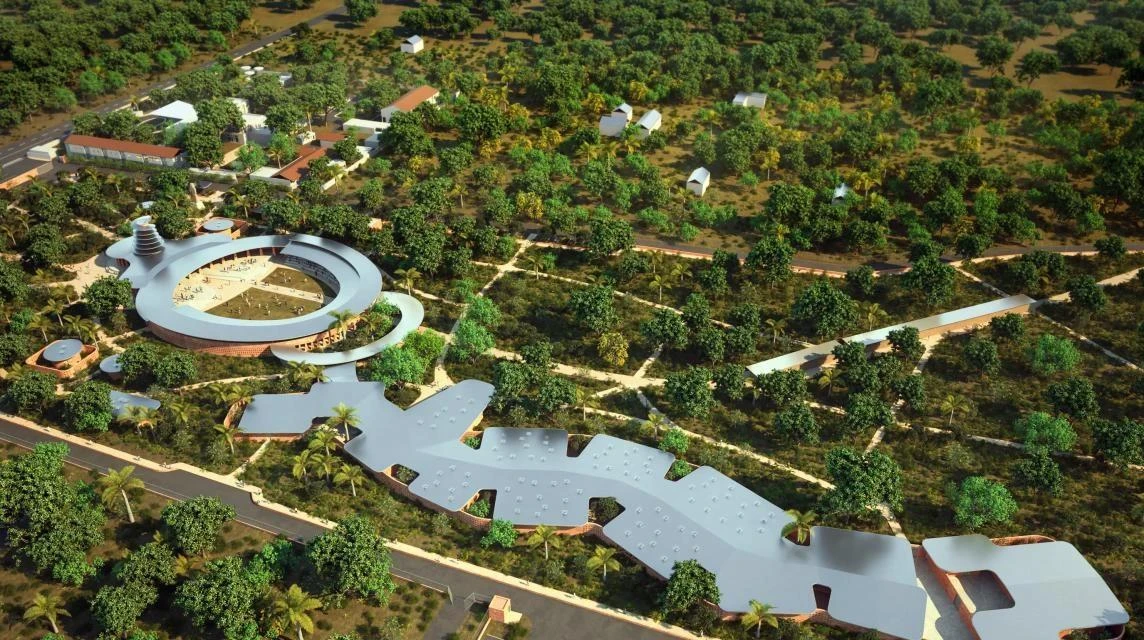
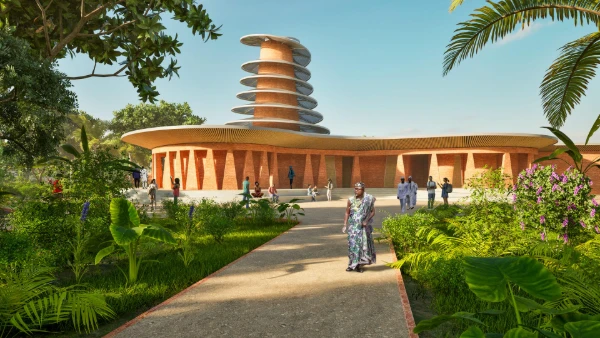
Diébédo Francis Kéré, born in Burkina Faso, became the first African architect to receive the Pritzker Architecture Prize in 2022. His work is recognised for its attention to local building traditions, climatic conditions and the social purposes of architecture. The Ewé Cultural and Spiritual Centre is his practice’s first project in Togo and continues an approach already demonstrated through educational and civic buildings in several African countries. Instead of creating a single monumental museum building, Kéré Architecture has designed an interconnected collection of relatively low structures that follow the surrounding landscape. This arrangement gives different cultural activities their own spaces while maintaining relationships between the historic wall, religious buildings, exhibition areas and communal courtyards.
Red laterite brick is the principal construction material specified for the complex. Laterite is widely associated with the soils and building traditions of tropical West Africa, and its reddish colour gives the proposed structures a strong visual relationship with their surroundings. The design also responds to the region’s warm climate through shaded courtyards, planted patios and natural ventilation. Open spaces between buildings are intended to encourage airflow, while carefully positioned openings introduce daylight into interior areas. These choices are practical as well as aesthetic: shade, air movement and controlled sunlight can improve comfort in buildings exposed to high temperatures. The project therefore combines contemporary design with construction principles suited to local environmental conditions rather than relying exclusively on enclosed, heavily air-conditioned spaces.
The most recognisable architectural feature is a spiralling tower positioned at the spiritual heart of the complex. According to the architects, its form represents the relationship between divinity, ancestral presence and the heavens. Another prominent feature is the entrance gateway, inspired by the traditional Ewé royal stool, an important symbol of authority. These elements give cultural meaning to the buildings without making every structure visually imposing. The planned reconstruction of the former royal palace adds a further historical dimension, enabling the complex to represent institutions of traditional leadership alongside religious and artistic heritage. Visitors will encounter architecture intended to communicate meaning through materials, proportions and spatial arrangements, with the historical setting remaining central to the overall composition.
Exhibition Galleries, Temples and Public Gathering Spaces
The museum component will include exhibition halls intended to present historical artefacts alongside contemporary artistic work. This combination is significant because it can connect objects associated with earlier generations to the cultural expression of Ewé communities today. The published architectural plans also provide for an auditorium and educational gathering spaces, creating opportunities for lectures, discussions, performances and other organised activities. Detailed permanent exhibition inventories, individual object lists and confirmed opening programmes have not yet been published in the accessible official project information. It would therefore be premature to promise specific collections or particular displays. What is established is the wider museum concept: preserving historical knowledge while allowing contemporary artists and cultural practitioners to contribute to the presentation of Ewé identity.
Temples and the Agbogbodzi Sanctuary form a separate but closely connected part of the complex. Their inclusion reflects the intention to recognise sacred traditions within their own cultural setting rather than reproducing them solely as museum exhibits. Visitors should understand that spaces intended for worship or ceremonial activities may operate differently from public galleries. Access could depend on religious observances, local protocols or decisions made by the site’s custodians. The architectural programme includes both larger and smaller temple structures, together with the sanctuary and surrounding landscaped areas. Their design incorporates shaded circulation spaces and natural materials, reinforcing the relationship between architecture and the spiritual landscape. The precise rules governing public entry to these areas will need to be confirmed by the centre’s operators once visitor arrangements are announced.
An open-air amphitheatre is another major element of the project. Designed as a place for collective gatherings, it could accommodate cultural performances, ceremonies and community events, although an official programme has yet to be announced. Additional facilities include reception areas, restaurants and meeting spaces, making it possible for the site to support activities beyond museum visits. The reconstructed royal palace is intended to provide a physical reference to the former Ewé kingdom, but visitors should distinguish a modern reconstruction from surviving original architecture. Together, these facilities create a setting where education, artistic expression, historical interpretation and cultural celebrations can reinforce one another. Their success will ultimately depend not only on the buildings themselves but also on the participation of local communities and the quality of the programmes developed after opening.
Visiting the Ewé Cultural Centre in Togo in 2026
Notsé lies in Togo’s Plateaux Region, around 80 kilometres north of Lomé, making it a potential destination for a cultural excursion from the capital. Road travel is the practical option for most visitors, although actual journey times depend on traffic, road conditions and the departure point. Travellers can arrange transport through local operators or use established regional services where available, then confirm onward access to the centre once its entrance and visitor arrangements are published. International visitors commonly begin their journeys in Lomé, which provides a broader choice of accommodation and transport connections. Anyone planning a trip specifically for the new centre should obtain confirmation that public visits have begun before making non-refundable bookings.
The timing of a visit also matters because southern Togo experiences seasonal changes in rainfall and temperature. The region generally has a wetter period during parts of the year and relatively drier conditions around the beginning and end of the calendar year, although local weather varies. Lightweight clothing, comfortable footwear, drinking water and protection from the sun are sensible for excursions involving outdoor courtyards and historical sites. As the centre combines museum facilities with sacred spaces, visitors should also be prepared to observe locally communicated dress and photography rules. Photography may be appropriate in some public areas but restricted during ceremonies or within places of worship. Respectful travel begins with asking permission when arrangements are unclear rather than assuming that every part of a cultural attraction is open to unrestricted access.
As of November 2026, the available official project information does not establish admission prices, regular opening hours, guided-tour fees or confirmed visitor reservation procedures. The architectural project page maintained by Kéré Architecture is an appropriate source for checking construction and development updates, while announcements from the Kothor Foundation or the site’s future management will be important for operational details. Visitors should also confirm whether the exhibition halls, temples, amphitheatre and reconstructed palace will open simultaneously or in stages. These practical questions are particularly relevant for travellers planning short stays in Togo. A scheduled opening month establishes a likely period of availability, but it does not guarantee access to individual buildings or cultural events on a particular date.
Cultural Tourism, Local Communities and the Centre’s Future Role
The centre could strengthen Notsé’s position within Togo’s cultural tourism network by giving visitors a dedicated place to learn about Ewé history and traditions. Unlike attractions that rely primarily on scenic surroundings, the project is rooted in the historical identity of its host community. That creates opportunities for local guides, historians, craftspeople, performers and cultural organisations to participate in the visitor experience. Restaurants, community gatherings and educational activities could also generate demand for local services, although the scale of any economic benefit cannot be established before the centre begins operating. The way in which the institution works with cultural custodians will be especially important. Responsible heritage tourism should support local participation and avoid reducing complex religious traditions to performances arranged solely for outside audiences.
The project also reflects a broader development in African museum architecture: greater emphasis on local historical narratives, community involvement and designs appropriate to their geographical settings. In Notsé, this means placing the Agbogbo wall and Agbogbodzi Sanctuary at the centre of a new architectural composition rather than treating them as secondary attractions. Kéré’s design uses contemporary construction methods while maintaining a visible relationship with regional building materials and cultural symbols. Its significance extends beyond its association with a celebrated architect. If the centre develops strong educational programmes and meaningful partnerships with Ewé communities, it could become an important resource for researchers, students and members of the Ewé diaspora interested in their ancestral heritage.
For travellers considering Togo in late 2026 or beyond, the Centre des Cultures et Spiritualités Ewés offers the prospect of a cultural visit combining historical interpretation, contemporary architecture and living spiritual heritage. Its principal features are already clearly defined: a 7,000-square-metre complex in Notsé, designed by Francis Kéré, organised around important ancestral landmarks and intended to contain exhibition spaces, temples, an amphitheatre and a reconstructed royal palace. What remains to be confirmed is the actual opening date and the full range of visitor services. Once accessible, the centre has the potential to become a significant destination for understanding the Ewé people’s cultural history and the continuing relationship between tradition, architecture and community life in West Africa.