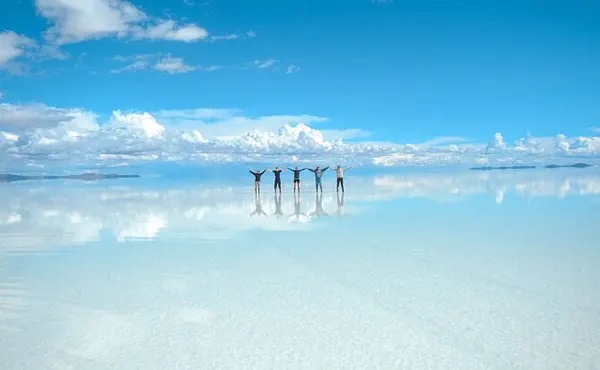
Salar de Uyuni (Bolivia): mirror season and how to choose the right tour
Salar de Uyuni is the world’s largest salt flat, sitting high on Bolivia’s Altiplano and behaving very differently depending on the season. In the wet months, a thin film of water can turn the surface into a near-perfect mirror; in the dry months, the crust hardens into bright, geometric patterns and the driving routes are usually simpler. This guide focuses on mirror season in practical terms—what conditions to expect, which itineraries make sense, and how to vet a tour so you get the experience you’re paying for.
When the mirror effect happens and what it really depends on
Mirror season is tied to the rainy period on the southern Altiplano. In broad terms, it runs from late December into early April, with January and February typically giving the best chance of a clean reflection when the water layer is even and shallow. That timing matters because many travellers plan flights months ahead and assume “rainy season” automatically means mirror conditions; in reality, you need the right combination of recent rainfall and calm weather, not simply a date on the calendar.
Expect trade-offs. The same water that creates reflections can also soften the surface and limit where vehicles can safely drive. Some days you’ll get a glassy mirror at sunrise, then wind picks up and the reflection becomes patchy by late morning. Other days, cloud cover can be spectacular for photos, but if storms are heavy the tour may spend more time on the edges of the salar rather than pushing deep into the centre.
Temperature and altitude are constant factors all year. Uyuni town sits around 3,700 metres, and the salt flat itself is at a similar elevation, so breathlessness and headaches are common if you arrive from low altitude and jump straight into a long day outside. Planning at least one acclimatisation day—often in La Paz or even just a quiet first evening in Uyuni—can be the difference between enjoying the sunrise and feeling unwell in the back of a 4×4.
Mirror season by month: choosing dates with realistic expectations
Late December is a “maybe” period: the rains are starting, but the water layer may be uneven and the mirror effect can be hit-or-miss. It can still be a good choice if you want a quieter trip and you’re comfortable with variability. The upside is that the light can be dramatic, and if you catch the right morning, the reflections are outstanding without peak-season crowds.
January and February are usually the best bet for the classic mirror look. If you can only pick one window, prioritise these weeks and keep your schedule flexible: build in a buffer day or two in Uyuni so you can shift the tour if weather turns. That flexibility is especially valuable for photographers who want calm wind at sunrise or sunset rather than simply “seeing the salt flats once”.
March into early April can still produce reflections, but conditions often transition. You might see a mix of mirror sections and exposed crust, which many travellers actually prefer because it gives variety in the same trip. By late April, the surface is generally drying out and tours increasingly resemble dry-season routing, with longer driving lines across firmer salt and fewer last-minute detours.
Tour formats and routes: what you get in 1, 2, and 3 days
The main decision is not the hotel, it’s the itinerary length. A 1-day tour is the quickest way to see the salt flat and usually includes nearby stops such as the train cemetery and Colchani salt-processing area before driving onto the salar. In mirror season, the day route may focus on the best reflection zones rather than the most distant points, because drivers prioritise safety and surface conditions.
Two- and three-day tours add the wider southwest circuit: high-altitude lagoons, desert landscapes, and geothermal areas toward the Eduardo Avaroa reserve. These longer itineraries are where you see the “other half” of the Uyuni region—pink-hued Laguna Colorada, mineral-green waters near the Chilean border, and fumaroles and geysers at extreme elevation. They also require more stamina, because some stretches push close to 5,000 metres and the days start early in cold, dry air.
Accommodation style varies by operator: basic hostels, simple lodges, or salt hotels around the edges of the flats. In mirror season, comfort is less about aesthetics and more about warmth, hot water reliability, and whether blankets are genuinely sufficient for sub-zero nights. If you sleep poorly, the early sunrise departure becomes harder, and sunrise is often the most rewarding moment for reflections.
Key stops that change with the season
Incahuasi (often called “Cactus Island”) is a signature dry-season stop because the approach requires driving deeper across the salt crust; many operators limit or skip it when the surface is wet. If Incahuasi is a must for you, be upfront: ask whether they expect to reach it on your dates, and what their plan is if the route is closed or unsafe. A credible operator will give a conditional answer rather than a guarantee.
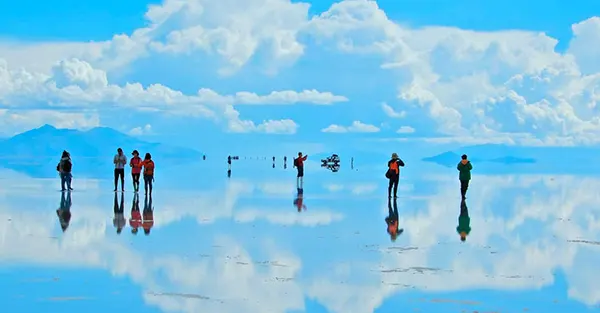
In mirror season, some of the most memorable scenes happen closer to the edges of the salar—long, shallow water sheets that catch the sky, especially when the wind is calm. The best tours use the day dynamically: they will choose entry points based on current conditions, not on a rigid checklist. That flexibility is worth more than a long list of “included highlights” that the company can’t reliably deliver in the wet months.
For multi-day circuits, ask about the return point. Some tours finish back in Uyuni; others continue to the Chilean border area. That matters for onward transport planning, but also for your risk tolerance: road conditions and disruptions can affect timing. A tour that promises an exact arrival hour without caveats is usually overselling certainty in a region where weather and local conditions can shift plans.
How to choose a tour operator: safety, transparency, and small details that matter
Start with basics that are easy to verify: a clearly stated itinerary, what meals are included, group size, and whether the vehicle is a true 4×4. In wet months, traction and responsible route choice are non-negotiable. If an operator can’t explain how they adapt routes in rainy conditions, that’s a warning sign—because adaptation is the whole job during mirror season.
Ask direct questions about costs. Many Uyuni tours advertise a headline price, then add park entry fees, Incahuasi entry, or border fees later. You don’t need a bargain; you need clarity. A reputable operator will give you a written breakdown of expected extra payments and tell you which fees are paid on the spot in cash. That makes your budgeting realistic and avoids the common frustration of “surprises” during the trip.
Finally, check the human element: who guides, who drives, and how decisions are made on the day. The best experiences come from guides who understand light, timing, and the realities of altitude—people who will slow the pace if someone is struggling, and who won’t pressure the driver to push into unsafe water just to match a brochure photo. In a place as exposed as Salar de Uyuni, good judgement is the difference between a smooth day and a stressful one.
A practical booking checklist for 2026 travel
Before you pay, confirm the pickup point, start time, and what happens if conditions force a route change. Mirror season is inherently variable, so you want an operator who sets expectations properly. Also ask about communication: will they message you the evening before with the latest plan, or do you have to chase updates at the office?
Pack with the environment in mind. Waterproof footwear matters more in the wet months than in the dry season; even a shallow water layer can soak trainers and make the day uncomfortable. Bring warm layers for mornings and evenings, sun protection for midday, and a dry bag or plastic liners for electronics—salt water and fine dust can be unforgiving on camera gear and phones.
Build resilience into your schedule. If your entire Bolivia itinerary depends on a single sunrise at Uyuni, you’ll feel every weather shift as a personal disaster. If you can spare an extra day, you can move the tour to chase better conditions. And if you’re travelling during a period when transport disruptions are possible, keep a buffer before international connections rather than planning a tight same-day transfer.