The Rock-Hewn Churches of Lalibela: Ethiopia’s Stone-Carved Sacred Heritage
The rock-hewn churches of Lalibela stand in the highlands of northern Ethiopia and represent one of the most remarkable examples of religious architecture created entirely from solid rock. Unlike traditional buildings assembled from stone blocks, these churches were carved downward into volcanic tuff, forming freestanding structures connected by tunnels, trenches, and narrow passages. They remain active places of worship and a living centre of Ethiopian Orthodox Christianity.
Historical Background and Origins of Lalibela
The construction of the churches is traditionally dated to the late 12th and early 13th centuries during the reign of King Lalibela of the Zagwe dynasty. According to Ethiopian historical chronicles, the king intended to create a symbolic “New Jerusalem” after Muslim conquests limited Christian pilgrimage access to the Holy Land. The churches were positioned and named to mirror sacred sites associated with Jerusalem.
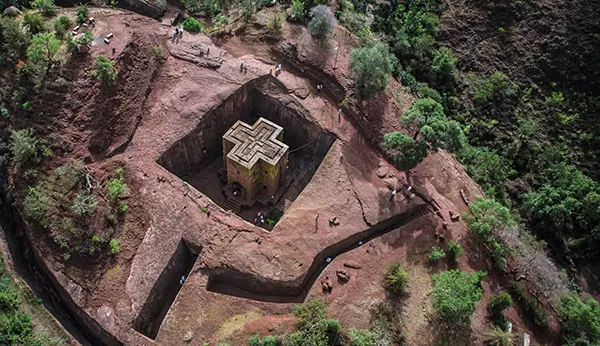
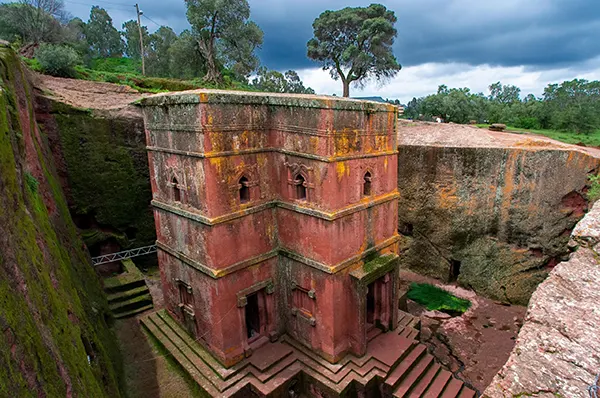
Archaeological and geological studies suggest that the work was carried out over several decades by skilled artisans using basic tools such as chisels and hammers. The choice of soft volcanic rock made the carving possible, yet required careful planning to prevent structural collapse. Each church was shaped from a single block, with roofs, walls, columns, and windows formed as part of the same mass.
Lalibela was never abandoned or repurposed, which distinguishes it from many ancient religious complexes. Continuous use has preserved not only the buildings themselves but also rituals, chants, and liturgical traditions that have been practiced for centuries.
King Lalibela and Religious Symbolism
King Lalibela remains a central figure in Ethiopian religious history, revered not only as a ruler but also as a saint. Local tradition holds that divine guidance played a role in the planning of the churches, although historical analysis points to a combination of political ambition and religious devotion.
The layout of the complex reflects deep symbolic intent. Rivers, such as the Jordan, were recreated in stone channels, while churches were grouped to represent heavenly and earthly realms. This symbolic geography allowed pilgrims to follow a sacred journey without leaving Ethiopian soil.
The naming of churches, including Bet Medhane Alem and Bet Golgotha, reinforces their theological meaning. Each structure serves a distinct liturgical function, forming a coherent religious landscape rather than a collection of isolated monuments.
Architectural Features and Engineering Methods
The architectural design of Lalibela’s churches demonstrates advanced understanding of geometry, drainage, and load distribution. Builders excavated deep trenches around each structure, isolating them from the surrounding rock while maintaining stability. Rainwater channels were integrated into the design to reduce erosion and flooding.
Exterior façades are deliberately austere, while interiors reveal finely carved columns, arches, and symbolic motifs. Windows are shaped in crosses, stars, and geometric patterns that regulate light and reinforce spiritual symbolism. Despite centuries of use, many interior elements remain intact.
The most famous church, Bet Giyorgis, is carved in the form of a Greek cross and stands completely detached from the surrounding rock. Its precise proportions and clean lines suggest a high level of technical planning rather than improvisation.
Subterranean Passages and Sacred Layout
The churches are connected by an extensive network of tunnels, narrow corridors, and open trenches. These passages were not merely functional but designed to guide movement during religious ceremonies and pilgrimages.
Walking through the complex involves descending into shadowed pathways before emerging into open courtyards, reinforcing a sense of spiritual transition. This deliberate control of light and space reflects a sophisticated approach to religious experience.
Some passages include carved reliefs and niches used for prayer, while others serve as practical routes between churches. The integration of movement, architecture, and ritual sets Lalibela apart from conventional sacred sites.
Lalibela Today: Pilgrimage, Preservation, and Tourism
Today, Lalibela remains one of Ethiopia’s most important pilgrimage destinations. Major religious festivals such as Genna (Ethiopian Christmas) attract tens of thousands of worshippers, many of whom travel long distances on foot. Clergy continue to conduct daily services using ancient manuscripts and liturgical instruments.
Preservation efforts have become increasingly important due to erosion, tourism pressure, and environmental factors. International conservation projects, supported by UNESCO, focus on stabilising structures, managing water runoff, and protecting fragile surfaces without altering the original design.
Tourism plays a significant role in the local economy, providing income through guiding services, accommodation, and handicrafts. At the same time, access is regulated to balance visitor interest with religious sensitivity and long-term conservation.
UNESCO Status and Cultural Significance
The rock-hewn churches of Lalibela were inscribed on the UNESCO World Heritage List in 1978, recognising their outstanding universal value. This status has helped secure funding and international expertise for preservation initiatives.
Lalibela is not viewed solely as a historical monument but as a living cultural landscape. Religious practices, music, and oral traditions continue to shape the identity of the site and its surrounding community.
For Ethiopia, Lalibela represents continuity between past and present, faith and craftsmanship. Its preservation is tied not only to architectural conservation but also to safeguarding intangible cultural heritage that remains deeply embedded in daily life.