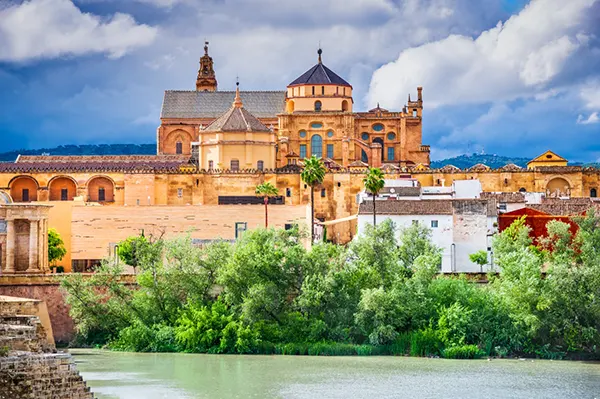
Mezquita-Catedral of Córdoba: What to See Inside and How to Plan Your Visit
The Mezquita-Catedral of Córdoba stands at the heart of Andalusia as one of Europe’s most complex and layered monuments. Originally founded as a mosque in the 8th century and consecrated as a cathedral in the 13th, it reflects more than a millennium of religious, political and architectural change. In 2026, it remains an active Catholic cathedral and a UNESCO World Heritage Site, drawing visitors not only for its visual impact but for its historical depth. A well-planned visit allows you to understand both its Islamic origins and its Christian transformation without feeling overwhelmed by the scale of the building.
The Historical Layers That Define the Mezquita-Catedral
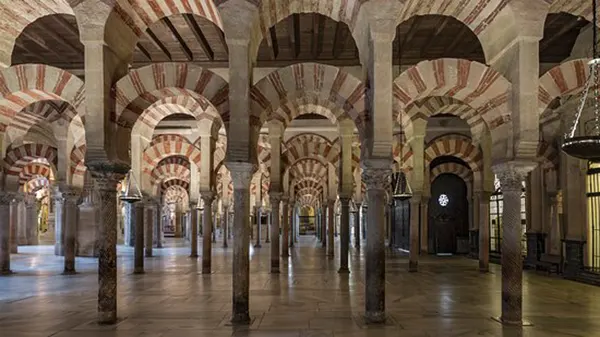
Construction began in 784 under Abd al-Rahman I, the Umayyad emir who established Córdoba as the capital of Al-Andalus. Over the following two centuries, successive rulers expanded the mosque, creating the vast hypostyle hall supported by hundreds of columns. The distinctive double arches—red brick alternating with pale stone—were not merely decorative; they allowed greater ceiling height while reusing Roman and Visigothic columns sourced from earlier structures in Iberia.
After the Christian reconquest of Córdoba in 1236, the mosque was consecrated as a cathedral. Rather than demolish the Islamic structure, Christian authorities gradually inserted chapels and liturgical spaces within it. The most dramatic intervention came in the 16th century, when a Renaissance nave and choir were constructed at the centre of the former prayer hall. Emperor Charles V later remarked that something unique had been altered to build something that could have existed anywhere, a comment often quoted by historians.
Today, the monument is officially managed by the Cathedral Chapter of Córdoba. It continues to function as a Catholic place of worship, with daily Mass and religious events. At the same time, it preserves its earlier Islamic architectural identity, making it one of the most studied monuments in European art history. Understanding this dual identity is essential for appreciating what you see inside.
UNESCO Status and Cultural Significance
The historic centre of Córdoba, including the Mezquita-Catedral, was declared a UNESCO World Heritage Site in 1984, with the designation expanded in 1994. UNESCO recognises the building as a masterpiece of Islamic architecture in the West and as a symbol of the cultural exchanges that shaped medieval Spain. Its preservation is subject to strict heritage regulations.
For scholars, the site offers insight into Umayyad architectural innovation outside the Middle East. The mihrab, completed in 965 under Al-Hakam II, is particularly significant. Its horseshoe arch and Byzantine mosaics—created by craftsmen sent from Constantinople—demonstrate diplomatic and artistic links across the Mediterranean.
In contemporary Spain, the monument also carries cultural and social meaning. Discussions about identity, heritage management and historical memory occasionally arise in public debate. Visitors in 2026 encounter not only an architectural landmark but a living symbol of Spain’s layered past.
What to See Inside: Key Architectural Highlights
Most visitors enter through the Patio de los Naranjos, the courtyard of orange trees that once served for ritual ablutions. The courtyard layout dates back to the Islamic period, although it has undergone modifications over centuries. From here, the Bell Tower—built around the former minaret—offers panoramic views over Córdoba for those who book a timed tower visit.
Inside, the forest of columns is the first striking feature. There are more than 850 columns of jasper, marble and granite supporting the iconic double-tiered arches. Walking through this space requires patience; the repetition creates a sense of rhythm and scale that is best appreciated slowly, especially in the quieter morning hours.
At the centre stands the Renaissance cathedral nave, markedly different in style. Designed by Hernán Ruiz and others in the 16th century, it features a high vaulted ceiling, choir stalls carved from mahogany, and an elaborate main altar. The contrast between the Gothic-Renaissance structure and the earlier Islamic architecture is deliberate and visually dramatic.
The Mihrab and the Maqsura
The mihrab is the most celebrated element of the former mosque. Unlike many mihrabs, it forms a small octagonal chamber rather than a simple niche. Its interior is richly decorated with gold mosaics, Qur’anic inscriptions and vegetal motifs. Although non-Muslim prayer is not permitted, visitors may observe the space respectfully from outside.
Adjacent to the mihrab lies the maqsura, an area once reserved for the ruler. The interlacing arches here are among the most intricate in Islamic architecture in Spain. Their geometric complexity contrasts with the relative austerity of other parts of the prayer hall.
Lighting plays an important role in this section. Natural light filters through discreet openings, highlighting the mosaic work. Photography is permitted without flash, and early hours generally provide better conditions both for viewing and for respectful circulation.
Planning Your Visit in 2026: Tickets, Timing and Practical Advice
As of 2026, general admission tickets can be purchased online through the official cathedral website or at the on-site ticket office, subject to availability. Booking in advance is strongly recommended during peak months from April to October. Entry is organised in time slots, and late arrival may require waiting for the next available window.
Opening hours vary by season and religious calendar. On certain mornings, access may be limited due to liturgical services. Visitors who wish to attend Mass may enter free of charge during designated worship times, but sightseeing is not permitted during the service itself. Checking the official timetable a few days before travel helps avoid inconvenience.
Dress should be respectful, as the building functions as a cathedral. Shoulders and knees are expected to be covered. Large bags may be restricted, and security checks are routine. Guided tours are available in several languages and are advisable for those who want detailed historical interpretation rather than a purely visual experience.
Best Times to Visit and Suggested Itinerary
Early morning, shortly after opening, tends to be the quietest period. In summer, Córdoba’s temperatures often exceed 35°C, making an early visit both more comfortable and less crowded. Late afternoon can also be pleasant, especially outside peak tourist season.
Allocate at least 90 minutes inside the monument. A typical route includes the courtyard, the hypostyle hall, the mihrab area, the Renaissance nave and several side chapels. If you book the tower climb, allow additional time, as access is strictly scheduled and limited to small groups.
Combine your visit with a walk through the Judería district and across the Roman Bridge. This broader context helps place the Mezquita-Catedral within Córdoba’s urban history. Planning your day with realistic timing ensures you leave with a clear understanding of why this monument remains central to Spain’s cultural heritage in 2026.